Successful prototype to production manufacturing depends on prioritizing Design for Manufacturability and establishing stable process controls early in the development cycle. Many scaling efforts fail due to rushed timelines or a lack of automation, which creates significant gaps between initial concepts and mass market realities. Companies can succeed by evaluating regionalized manufacturing pathways and utilizing prototypes to test performance before committing to full scale production.
Holding a functional prototype in your hands often feels like reaching the finish line, yet for many innovators, it is actually where the most expensive mistakes begin. The transition from a single proof of concept to a scalable production run is a technical chasm that swallows countless ambitious projects. It is one thing to hand-build a device in a laboratory setting; it is quite another to manufacture it at scale without compromising integrity or inflating unit costs. At Snow Manufacturing, we frequently observe teams struggle when they treat a prototype as a final design rather than a blueprint for industrialization. This guide identifies exactly why scaling efforts fail, from neglecting Design for Manufacturability to premature process expansion. You will learn how to bridge the gap through rigorous specification and discover how regionalized production in Fillmore, Utah, offers a strategic advantage for 2026.
The Chasm Between a Working Prototype and a Scalable Product
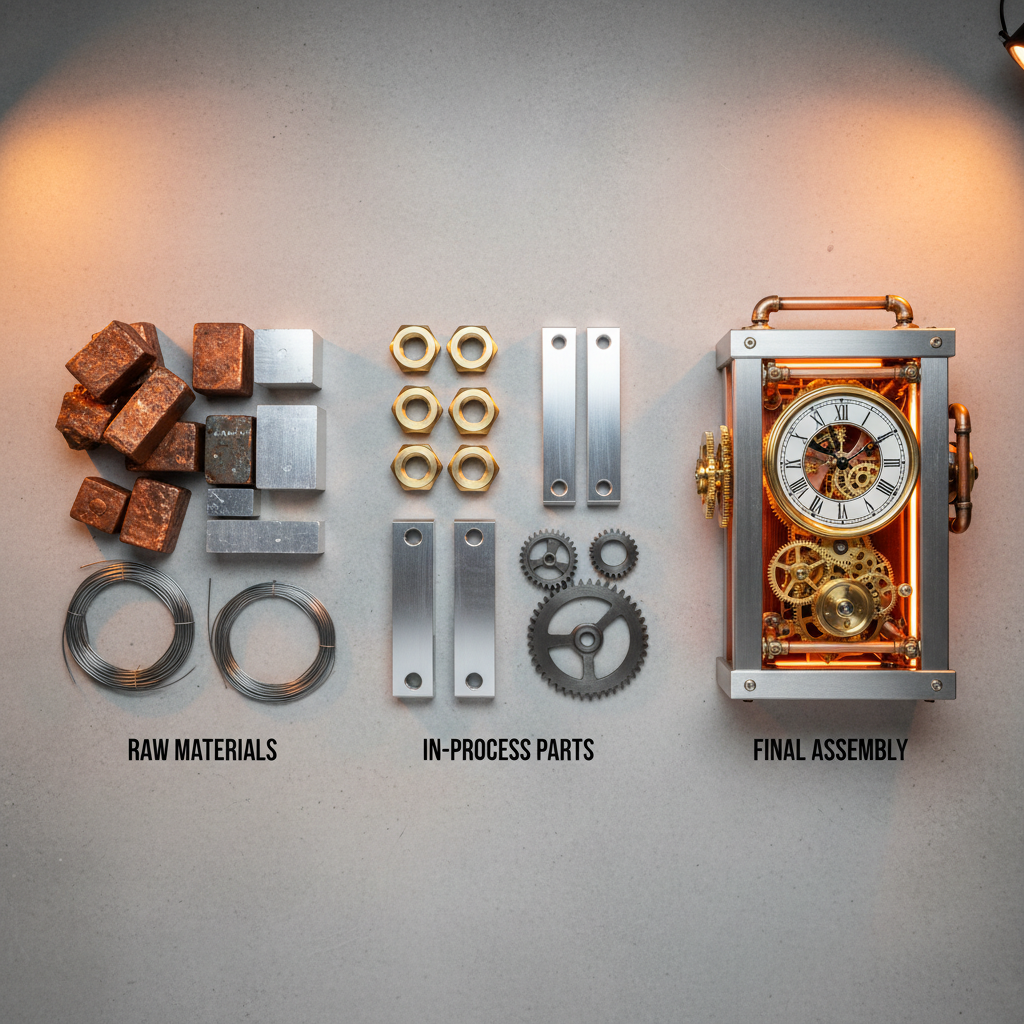
The transition from a bench-top model to a market-ready product is rarely a straight line. In product development, this is known as the Valley of Death. It represents the critical juncture where a functional prototype, despite proving the initial concept, fails to translate into a profitable production unit. The discrepancy lies in the objective. A prototype is designed to prove that an idea can work once. In contrast, successful prototype to production manufacturing must prove that the concept can be repeated ten thousand times with absolute precision, consistency, and cost-effectiveness.
Scaling often reveals vulnerabilities that remain hidden in small-scale testing. A hand-built model might perform perfectly; however, without reliable manufacturing and production solutions, those results rarely scale without catastrophic cost increases or quality failures. Bridging this chasm requires a philosophy rooted in precision and accountability. At Snow Manufacturing, we focus on practical design as the essential bridge across this development gap. By aligning engineering rigor with efficient operations, we ensure that the transition is stabilized by repeatable processes. Our goal is to move beyond mere conceptual proof and establish a foundation where products perform reliably in demanding, real-world environments.
Mistake 1: Treating the Prototype as a Final Design
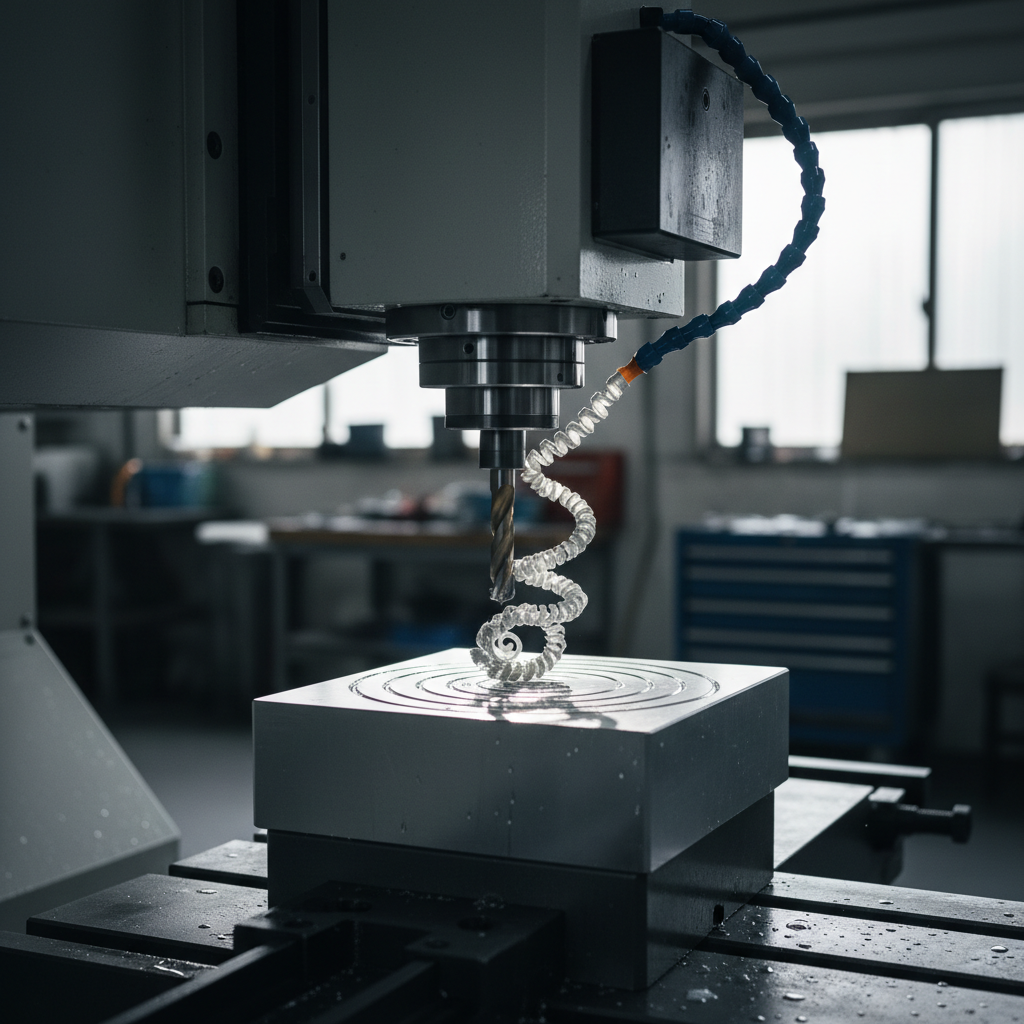
The jump from a "looks-like, works-like" prototype to a production-ready unit is where many projects stall. A prototype is built to prove a theory; it is rarely built to be manufactured. Additive manufacturing, such as 3D printing, allows designers to ignore the physical constraints of subtractive machining. When a design moves to high-volume CNC production, features that were trivial to print or manually machine become significant liabilities.
Manual machining or 3D printing allows for one-off workarounds that simply do not scale. For instance, a technician can spend hours babying a single part through complex setups to achieve a sharp internal corner or a deep, narrow slot. In a high-volume environment, these features become bottlenecks. 3D printers can create hollowed-out internal chambers or complex lattices that a physical cutting tool cannot reach. If a design requires a tool to reach six inches into a half-inch hole, tool deflection and heat buildup will destroy the precision and accountability of the production run. A spinning end mill naturally leaves a radius; forcing a square corner into a machined part often requires specialized, slow operations like EDM (Electrical Discharge Machining) that drive up costs without adding functional value.
Realizing a scalable product requires the design to adapt to the limitations and strengths of production-grade equipment. At Snow Manufacturing, our prototype to production manufacturing strategy involves auditing every feature for its machinability. We replace unmachinable geometries with functional equivalents that favor efficient operations, such as adding fillets to internal corners or adjusting wall thicknesses to support tool pressure. This evolution is not a failure of the original design; it is the necessary refinement that makes a product viable for the market and ensures it can be produced with the consistency required for demanding environments.
Mistake 2: Neglecting Design for Manufacturability (DFM) Early On
Designing for function and designing for the machine are two different disciplines. Neglecting Design for Manufacturability (DFM) early in the development cycle often leads to excessive cycle times and high scrap rates. For example, a common oversight in prototype to production manufacturing is specifying hole depths that exceed ten times the diameter of the drill. This requires specialized peck-drilling cycles and increases the risk of tool breakage, which halts production. By reducing that ratio or allowing for a slightly larger diameter, a shop can use standard tooling and faster feeds.
Wall thickness is another critical variable. In CNC machining, walls that are too thin vibrate under the pressure of the cutting tool, a phenomenon known as chatter. This forces the machinist to slow down the spindle speed significantly to maintain surface finish. Adjusting a wall thickness by even 0.020 inches can stabilize the part, allowing for more aggressive cuts that reduce cycle times by 20 percent or more. When these efficiencies are combined with efficient operations and modern equipment, the cost per unit drops without sacrificing the structural integrity of the part.
Feature | Production Challenge | DFM Optimization |
|---|---|---|
Deep Holes | Increased tool breakage and slow peck cycles | Limit depth to 5x-8x diameter |
Thin Walls | Tool chatter and poor surface finish | Maintain minimum 0.020" for aluminum |
Sharp Corners | Requires slow EDM or specialized setups | Use standard tool radii (fillets) |
At Snow Manufacturing, we align engineering and production teams during the initial review phase. We identify where draft angles can be optimized for easier fixture release or where tolerances can be widened on non-critical dimensions to facilitate reliable manufacturing and production solutions. By catching these issues before the first production run, we ensure that the transition reflects our commitment to precision and accountability, turning a theoretical design into a repeatable, high-performance product.
Mistake 3: Material and Specification Mismatch
Successful prototype to production manufacturing depends on selecting materials that survive the transition from the lab to the shop floor. Many developers fall into the trap of using prototype-grade materials, such as high-performance 3D printing resins, to prove a concept. While these materials are excellent for visual verification, they rarely mirror the mechanical properties of production metals or industrial plastics. Replacing a polymer prototype with a die-cast aluminum production unit introduces significant shifts in weight, thermal expansion, and structural rigidity. A tolerance that feels functional in a flexible resin may become a failure point in rigid metal, where thermal growth during operation can lead to binding or premature wear.
Property | Prototype Polymer | Production Aluminum |
|---|---|---|
Thermal Expansion | High (Variable) | Low (Predictable) |
Weight | Lightweight | Moderate to High |
Rigidity | Flexible/Compliant | High/Structural |
Lead Time | Instant (In-house) | Subject to Supply Chain |
As the industry moves toward 2026, regionalized manufacturing is becoming the standard for mitigating supply chain volatility. Selecting materials available through local Utah or US based supply chains is a strategic decision that reduces scaling risks. Relying on overseas specialty stock or niche alloys often leads to lead-time bottlenecks that stall efficient operations. At Snow Manufacturing, we emphasize precision and accountability by vetting material specifications early. We prioritize domestic sourcing to ensure that the materials used in production are consistent, traceable, and readily available. This focus on reliable manufacturing and production solutions ensures that the finished good performs exactly as the engineering intended, without the unpredictable delays or cost fluctuations associated with international logistics.
Mistake 4: Scaling the Process Before Stabilizing the Design

The challenges of scaling production processes often center on the amplification of minor errors. In the rush to meet market demand, companies frequently attempt to ramp up volume before the design has been fully stabilized. This oversight leads to what is known as scaling defects. If a design has a 2 percent failure rate during the prototype stage, that margin might seem acceptable for a handful of units. However, at a production volume of 50,000 units, that 2 percent translates to 1,000 defective parts, representing a massive loss in material, labor, and machine time.
In the early stages of prototype to production manufacturing, repeatability is significantly more important than raw speed. A manufacturing process that operates at high speed but lacks consistency will only produce waste faster. We prioritize precision and accountability by ensuring that every fixture, tool path, and inspection protocol is hardened before hitting maximum output. By focusing on reliable manufacturing and production solutions that stabilize the design first, we help clients avoid the catastrophic costs of mass producing an error. This measured approach ensures efficient operations that can sustain long term growth without the risk of large scale recalls or scrapped inventory.
The 2026 Advantage: Regionalized Production in Fillmore, Utah
The manufacturing landscape of 2026 is defined by reshoring and the rise of regionalized production hubs. For businesses navigating prototype to production manufacturing, the geographical distance between engineering and the factory floor has become a critical risk factor. Operating out of Fillmore, Utah, Snow Manufacturing leverages this trend by offering domestic proximity that facilitates faster iterations. When a design adjustment is needed during the pilot run, being able to communicate directly with the shop floor or receive overnight samples ensures that momentum is never lost to international shipping delays or communication barriers.
This local focus directly addresses the US factory automation gap. While many domestic facilities struggle to integrate technology effectively, we utilize modern equipment to maintain efficient operations without sacrificing the human precision required for complex assemblies. By combining automated consistency with expert manual oversight, we provide reliable manufacturing and production solutions that overseas competitors often miss. This model fosters a culture of precision and accountability, where quality control is an integrated part of the workflow rather than a final, separate hurdle. A regional partnership ensures that the transition from a single unit to a full production line remains transparent, manageable, and grounded in real-world usability.
A Checklist for a Successful Prototype to Production Transition

Successful prototype to production manufacturing requires a structured handoff from the engineering desk to the machine shop floor. This checklist ensures that no technical details are lost during the transition to high-volume output.
Finalize material specifications for bulk procurement. Transitioning to large orders requires locked-in specs to avoid variance between batches. Confirm that your chosen materials are readily available through domestic supply chains to maintain efficient operations.
Verify cumulative tolerances across the full assembly. While individual parts might pass inspection, tolerance stack-up can lead to failures during final assembly. Verify how variations in one component affect the performance of the entire finished good.
Establish objective quality control benchmarks. Define measurable Pass, Fail criteria for every critical dimension to maintain precision and accountability throughout the production run.
Select a partner with end-to-end capabilities. Partner with a shop that offers reliable manufacturing and production solutions ranging from initial component machining to final product assembly, ensuring a seamless flow from raw stock to market-ready goods.
Successfully moving from a prototype to full-scale production is a complex journey that requires careful planning and technical precision. By prioritizing scalability early in the design process, you can avoid common pitfalls that derail many emerging brands. While navigating these technical hurdles independently is possible, having a seasoned manufacturing partner can streamline the entire process. If you are looking for expert guidance to bring your project to life, you can learn more about our specialized approach and team. We are here to support your manufacturing goals.